Dongho Park
Ph.D. Candidate in Robotics @ Georgia Tech

About Me
I am a Ph.D. candidate in Robotics at Georgia Institute of Technology, advised by Dr. Aaron Young in the Exoskeleton & Prosthetic Intelligent Controls (EPIC) Lab.
I develop AI-powered wearable systems to understand and improve human mobility. My clinical foundation keeps my work grounded in real needs and translatable to real life.
My research bridges machine learning and wearable robotics for assistive and rehabilitative applications:
- Machine learning models for human movement understanding, deployed in real-time for closed-loop wearable robot control
- Wearable system development, from sensing and hardware design to embedded implementation
- Large-scale biomechanics datasets with neuromuscular modeling and simulation to advance data-driven movement science
Before robotics, I studied medicine and investigated human movement through biomechanical and neuromuscular research. I studied how muscles compensate, how gait adapts, and how the body responds to intervention. This foundation, including five years of medical training and research, directly informs how I approach patient-centered technology development.
Research Highlights
Tuning-Free Hip Exoskeleton for Stroke Survivors
Developed a wearable system that assists stroke survivors without manual calibration. Using deep learning to estimate physiological effort in real-time, the system enables automatic adaptation across new users and novel tasks. Clinical trials with 12 chronic stroke survivors demonstrated reduced metabolic cost, improved walking endurance, and increased mobility confidence.
Learn more →Human-in-the-Loop Optimization
Developed a data-efficient optimization framework that automatically discovers personalized assistance parameters for wearable systems. Using Bayesian optimization with real-time metabolic feedback, the optimized profiles reduced metabolic cost by 4.5% compared to no exoskeleton and 11.4% compared to unassisted walking.
Learn more →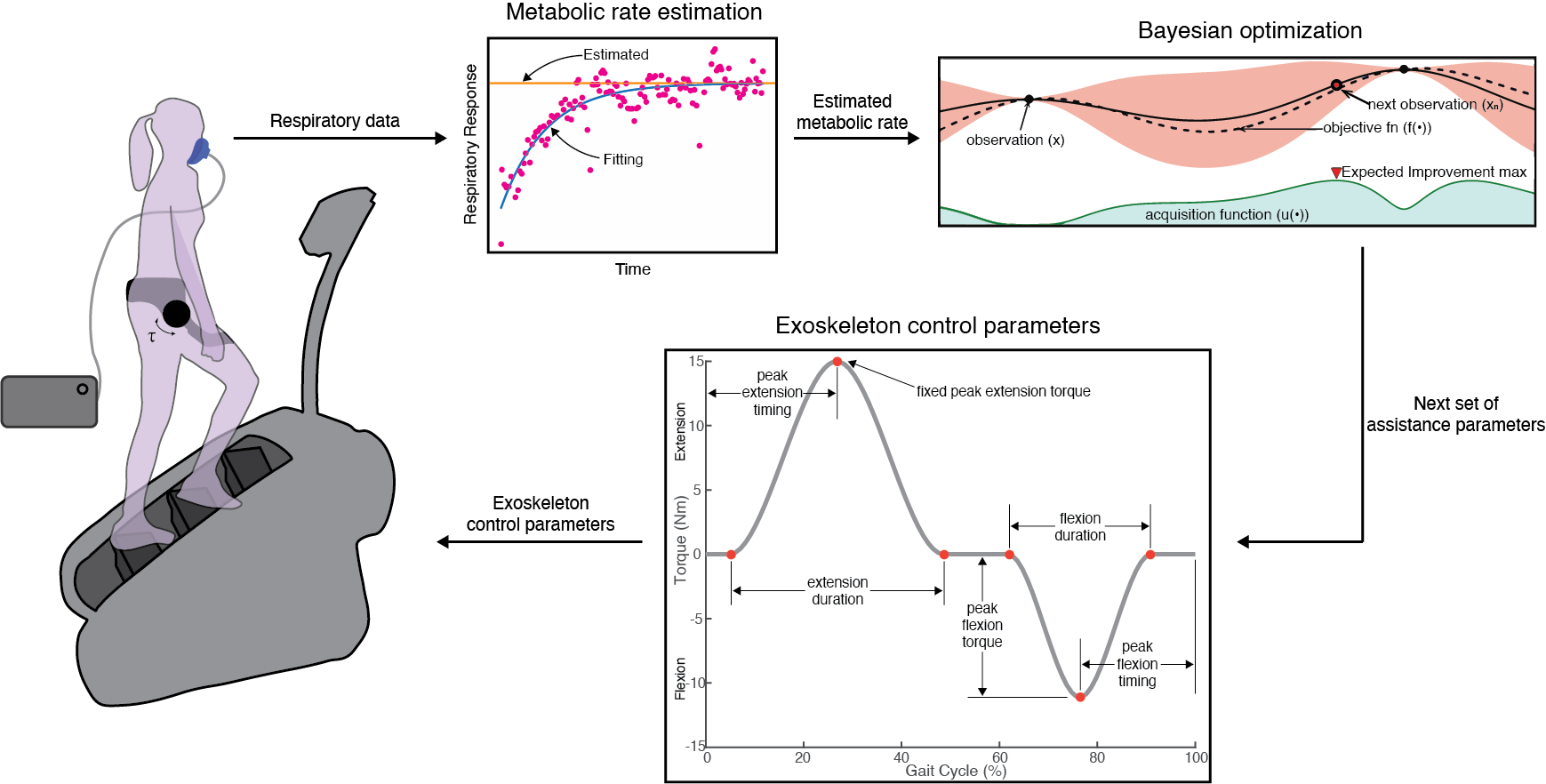
Large-Scale Stroke Biomechanics Dataset
Created a comprehensive, open-source multimodal dataset capturing 20 stroke survivors performing 39 real-world activities. Provides synchronized MoCap, IMU, and EMG data alongside an open-source Python toolbox—advancing biomechanics research, AI model development, and assistive technologies.
Learn more →Ergonomic Hardware & Flexible Sensing
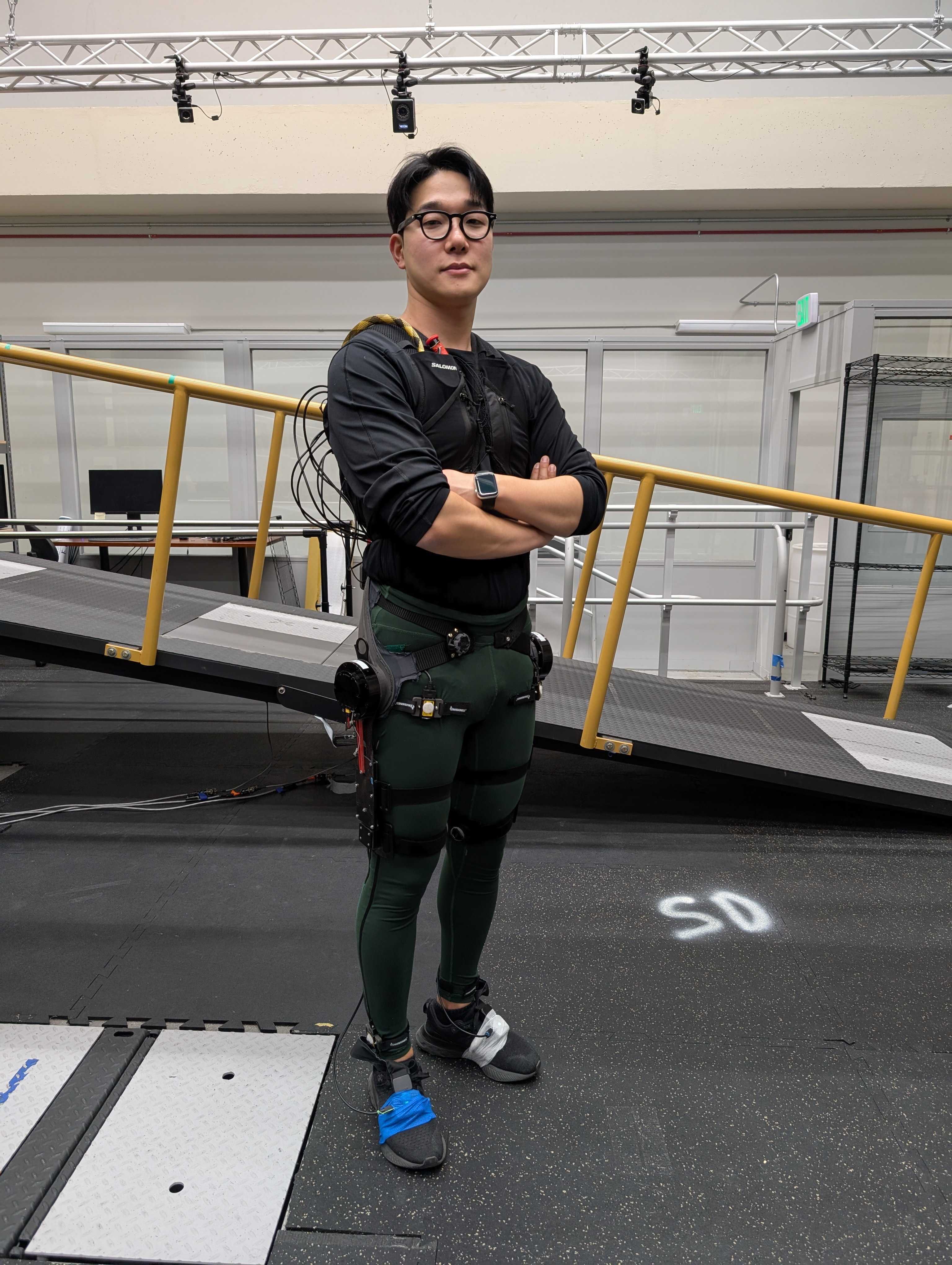
Developed a fully portable, lightweight (2.5 kg) hip exoskeleton with quasi-direct-drive actuators and integrated "Second Skin" sensing suite. The flexible sensor suite of IMUs and pressure insoles enables real-time physiological state estimation. Served as the enabling technology for clinical trials and dataset collection.
Learn more →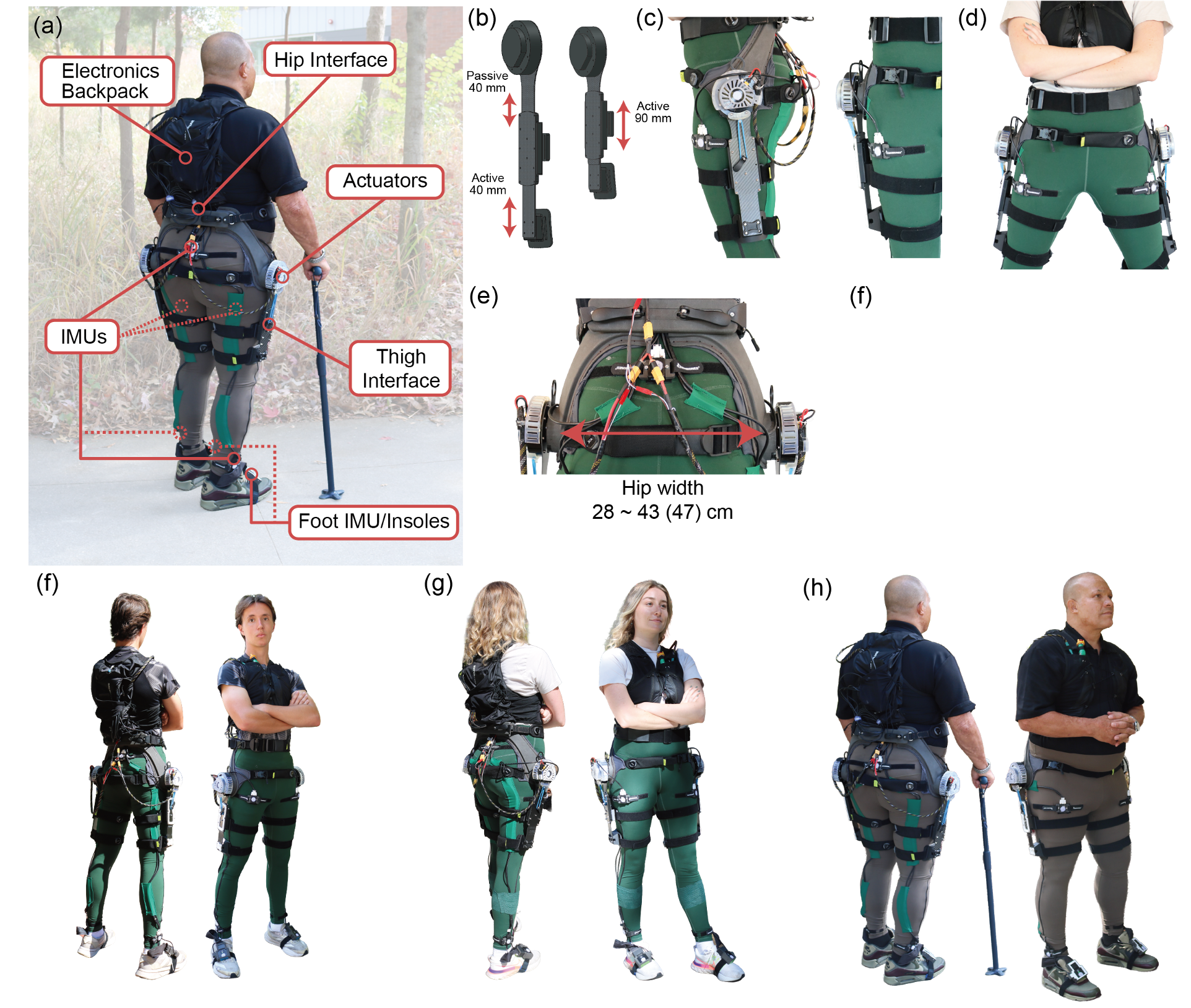
News
- Jan 2026 Teaching lectures on Machine Learning and Human Performance Evaluation as a TA for ME 6409: Biomechatronics of Wearable Robotic Devices.
- Dec 2025 Invited talks at KAIST, Korea University, and Yonsei University.
- Sep 2025 Received the Woodruff School Undergraduate Mentoring Fellowship.
- Aug 2025 Our paper on online adaptation framework for personalized exoskeleton assistance was published in IEEE TRO.
- Jul 2025 Our paper on human-in-the-loop optimization was selected as Featured Article in IEEE TBME.
Selected Publications
A versatile, tuning-free hip exoskeleton improves real-world mobility in a clinical trial with stroke survivors
Targeting Nature Medicine (Planned Submission: Feb 2026)
Online Adaptation Framework Enables Personalization of Exoskeleton Assistance During Locomotion in Patients Affected by Stroke
IEEE Transactions on Robotics, 2025.
Human-in-the-loop optimization of hip exoskeleton assistance during stair climbing
IEEE Transactions on Biomedical Engineering, 2025. [Featured Article]