Research Vision
I aim to improve human mobility across the lifespan through intelligent wearable systems. My research spans three interconnected directions: wearable sensing to capture how people move in daily life, machine learning to transform movement data into actionable insight, and adaptive assistive technologies that respond to each individual's needs. These efforts are unified by a commitment to building solutions that work in real life, for real people.
A Versatile, Tuning-Free Hip Exoskeleton Improves Real-World Mobility in Stroke Survivors
This study develops a wearable system that assists stroke survivors without manual calibration—a key barrier to real-world deployment. The system uses deep learning to estimate physiological effort from wearable sensors in real-time, enabling automatic adaptation across new users, novel tasks, and heterogeneous patient physiologies.
A wearable sensing suite integrated with an in-house designed hip exoskeleton enables seamless, personalized assistance. Clinical trials with 12 chronic stroke survivors demonstrated reduced metabolic cost, improved walking endurance, and increased mobility confidence across diverse daily activities including stairs, slopes, and sit-to-stand transitions.
Targeting Nature Medicine (Planned: Feb 2026)
Personalized Hip Exoskeleton Assistance via Human-in-the-Loop Optimization
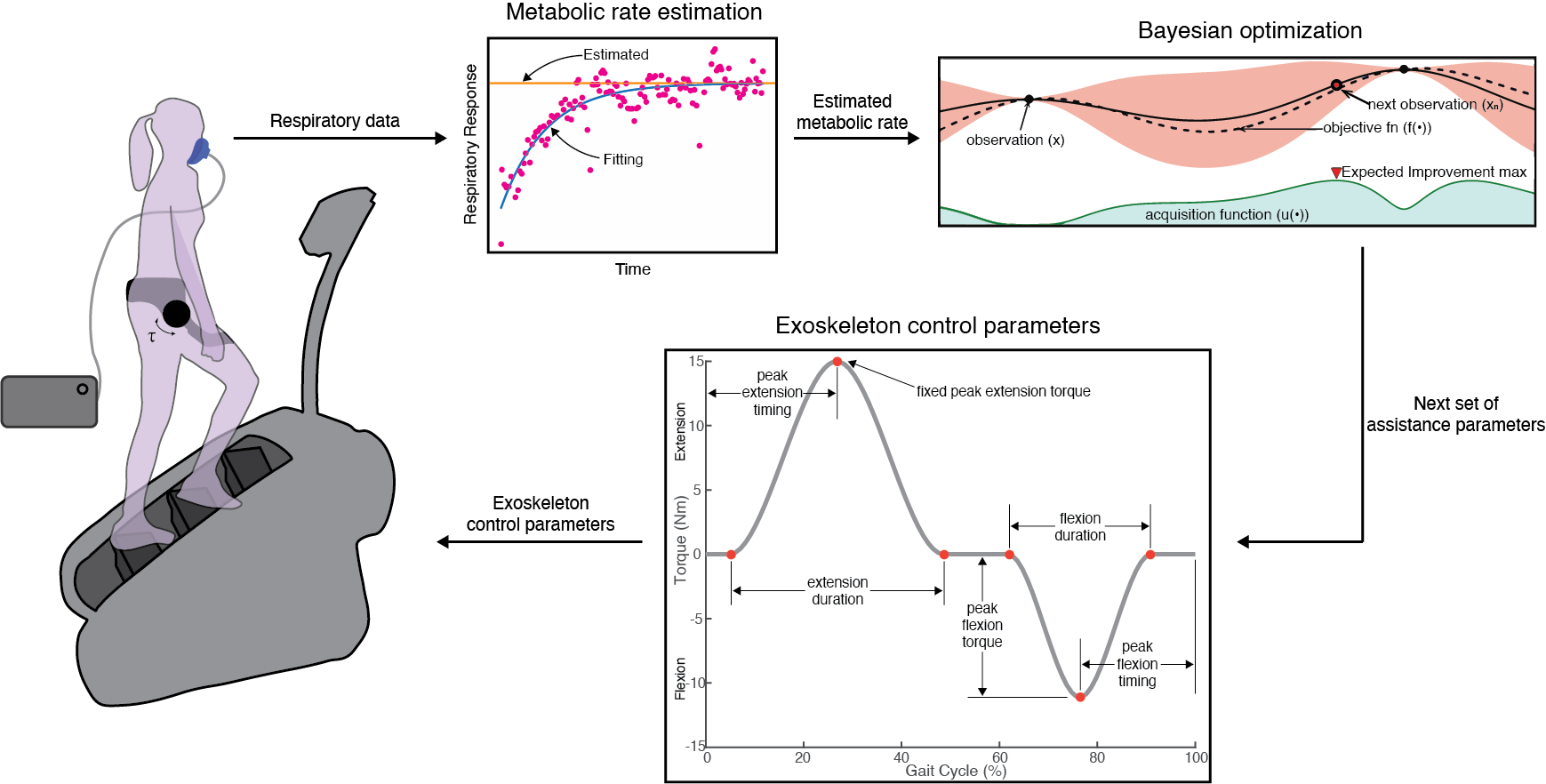
This study develops a data-efficient optimization framework that automatically discovers personalized assistance parameters for wearable systems.
Using Bayesian optimization with real-time metabolic feedback, the system efficiently searches high-dimensional parameter spaces to find optimal assistance profiles for each user—without exhaustive manual tuning. Validated on hip exoskeleton assistance during stair climbing, the optimized profiles reduced metabolic cost by 4.5% compared to no exoskeleton and 11.4% compared to unassisted exoskeleton walking.
IEEE Trans. Biomedical Engineering, 2025 [Featured Article]
Open-Source Stroke Biomechanics: A Large-Scale Multimodal Dataset
This study creates a comprehensive, open-source dataset capturing how stroke survivors move during real-world activities—data essential for advancing biomechanics research, training generalizable AI models, and developing assistive technologies.
The dataset includes 20 stroke survivors performing 39 activities with synchronized motion capture, wearable IMU, pressure insole, and EMG, along with clinical assessments (Fugl-Meyer, Mini-BESTest). Beyond raw data collection, I developed a complete processing pipeline—data cleaning, musculoskeletal modeling (OpenSim), and biomechanical analysis including body scaling, inverse kinematics, and inverse dynamics. I also built an open-source Python toolbox for visualization and clinical analysis, designed to be accessible to both engineers and clinicians.
Targeting NEJM AI (Planned: Mar 2026)
Ergonomic Robotic Hip Exoskeleton with Integrated Flexible Sensing
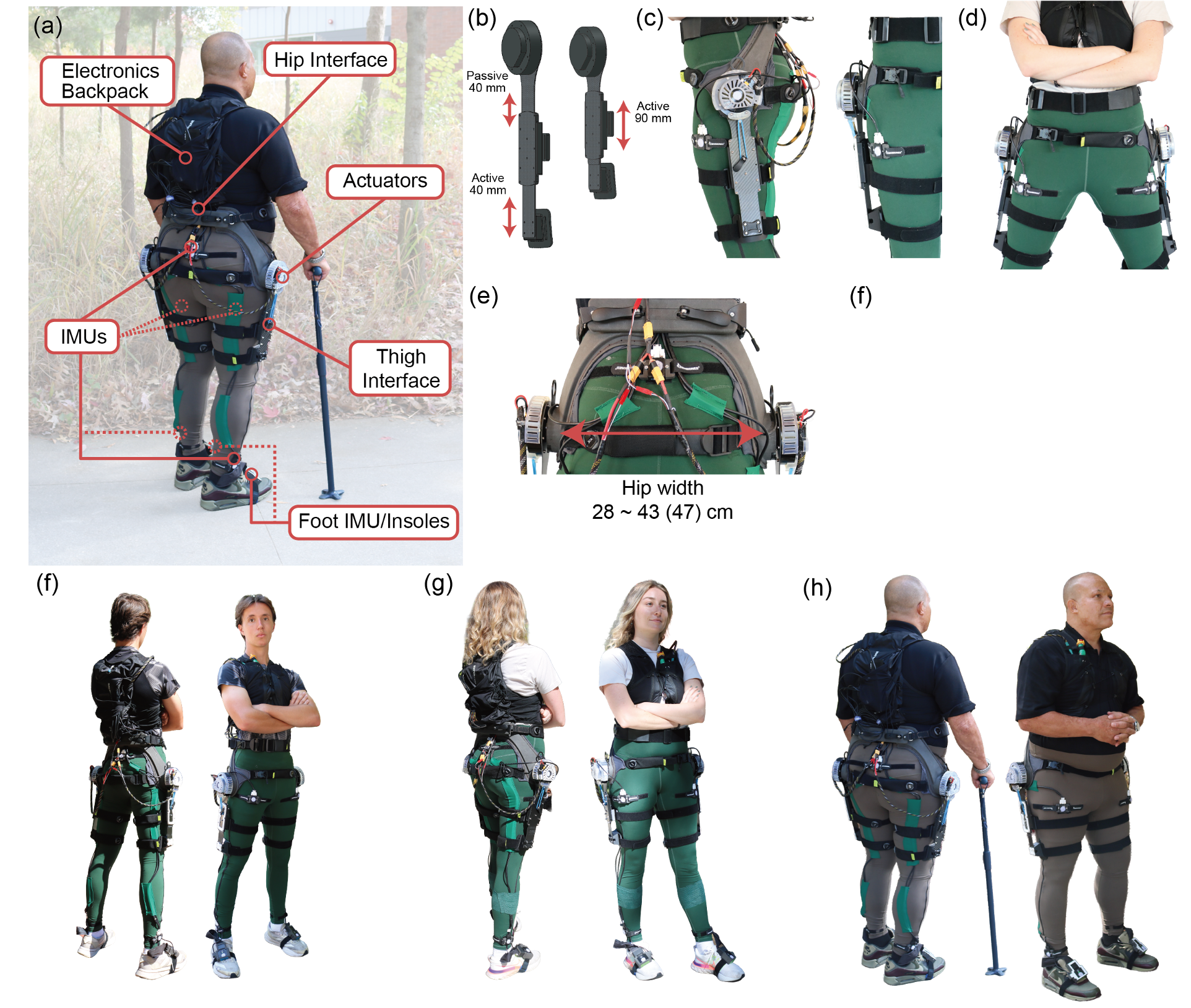
This work presents a fully portable, lightweight (2.5 kg) hip exoskeleton platform designed for real-world clinical application. Serving as the enabling technology for our clinical trials [Targeting Nature Medicine] and stroke biomechanics dataset [Targeting NEJM AI], it bridges the gap between lab robotics and daily use.
Integrated "Second Skin" Sensing: The system features a flexible sensor suite of IMUs and pressure insoles, providing high-fidelity, real-time tracking for estimating user physiological states in unstructured environments.
Clinical-Centric Design: Controlled by an onboard NVIDIA Jetson Orin Nano with quasi-direct-drive actuators, the hardware prioritizes usability:
- Universal Fit: An adjustable interface seamlessly accommodates diverse body shapes and sizes without the need for custom fabrication.
- Rapid Deployment: Quick-detach modules and magnetic buckles enable fast donning/doffing and precise alignment by clinicians.
- Hybrid Construction: SLS-printed Nylon offers slight flexibility for comfortable fit while custom carbon fiber components ensure robust torque transmission.
Robot-Assisted Overground Gait Training Improves Mobility in Children with Cerebral Palsy
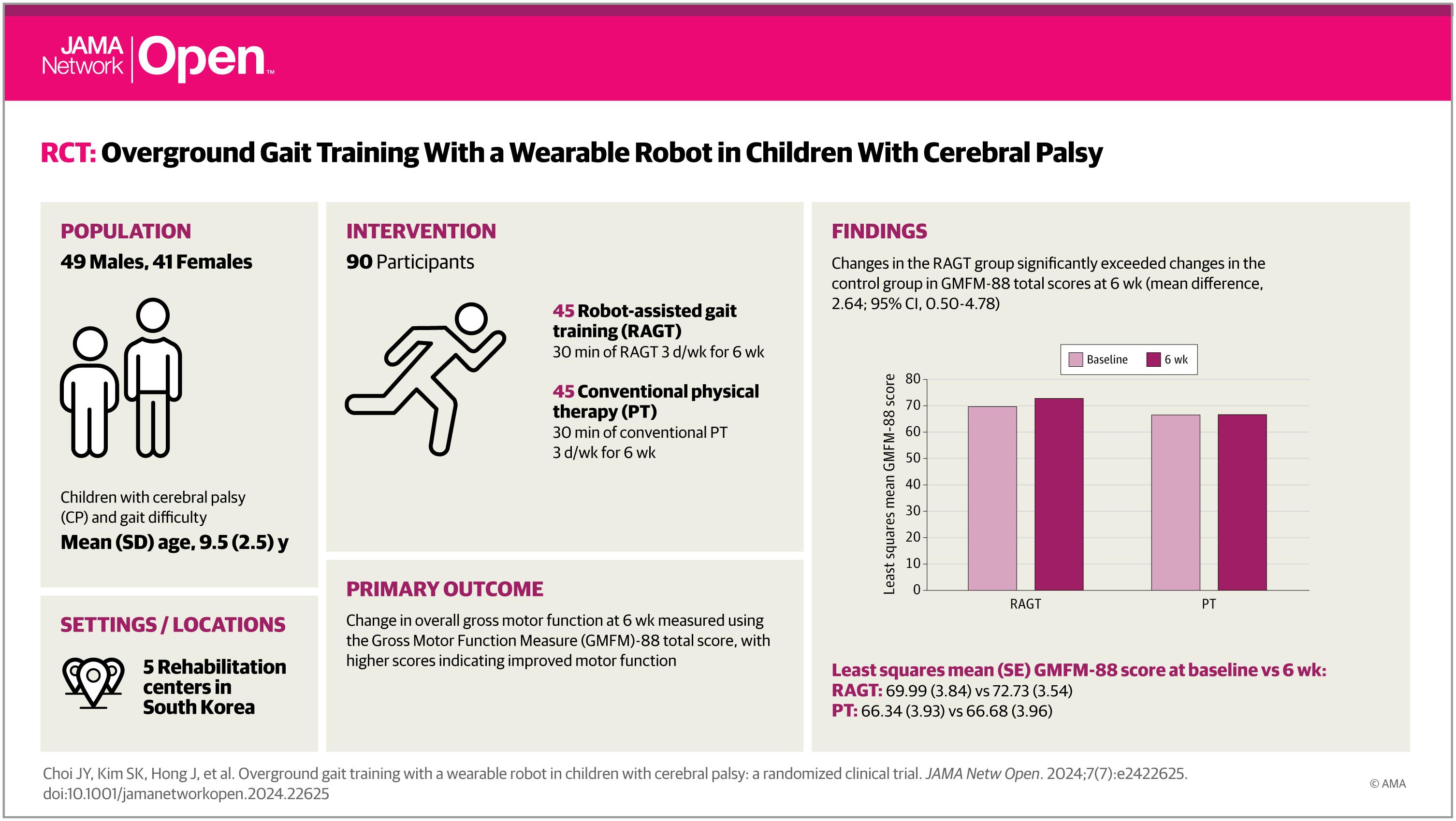
This study evaluates the clinical effectiveness of a torque-assisted wearable exoskeleton for gait rehabilitation in children with cerebral palsy.
In a multicenter randomized clinical trial with 90 children, robot-assisted gait training significantly improved gross motor function, balance control, and gait pattern compared to conventional physical therapy. The wearable exoskeleton enabled intensive overground training with nearly 1000 steps per session—4.7 times the training intensity of the control group.
Neuromuscular Compensation Strategies Following Selective Muscle Paralysis
This study investigates how the human body compensates for localized muscle dysfunction—foundational knowledge for understanding human biomechanics and physiology.
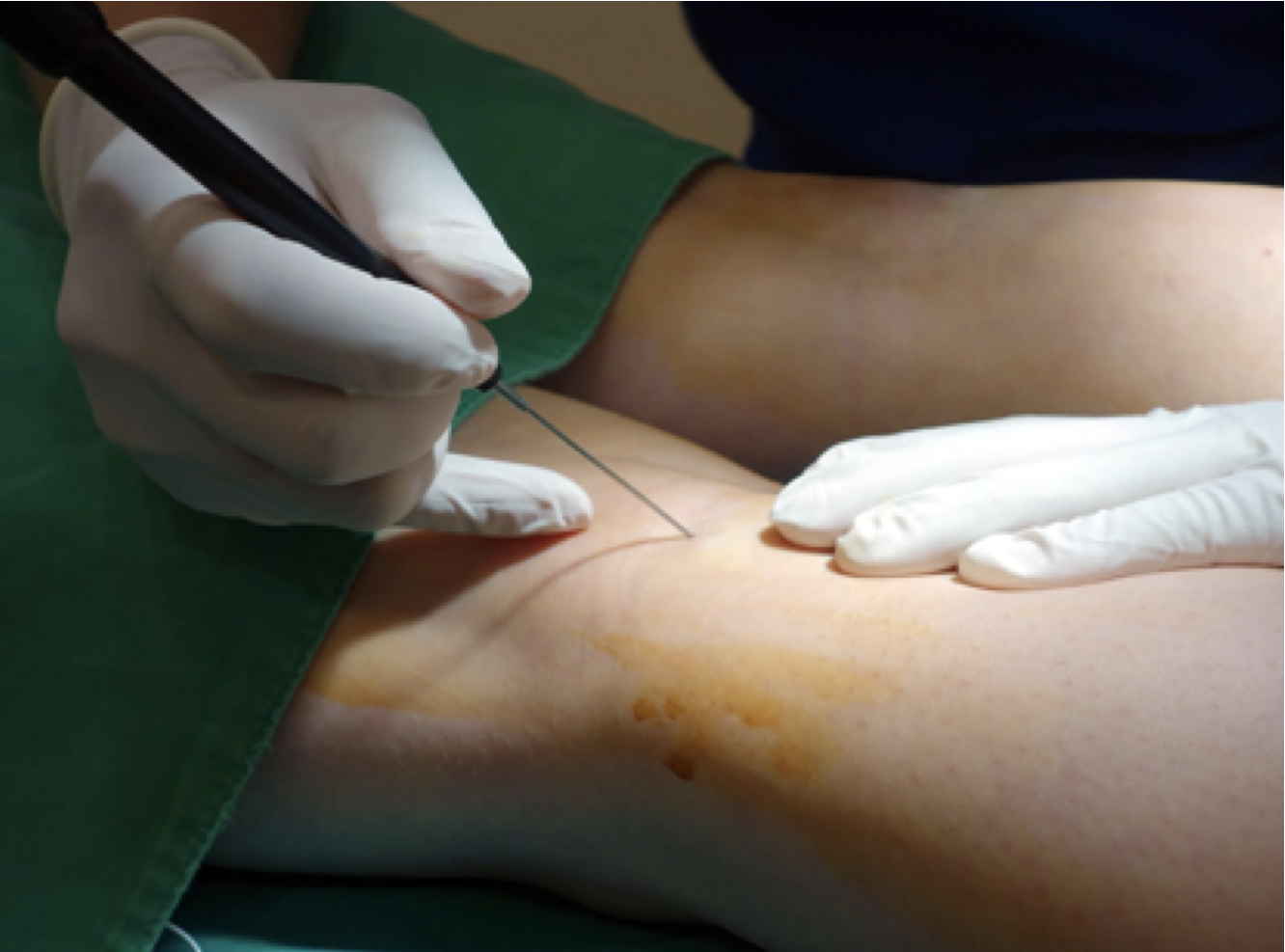
By analyzing gait patterns before and after selective nerve block to the gastrocnemius medial head, I showed that the body uses fundamentally different compensation strategies for level walking versus stair climbing. During level walking, other muscles compensate to maintain normal kinematics; during stair climbing, compensation fails and gait patterns change significantly.